Wyoming Paycheck Calculator
Determine your net take-home salary in WY. Enter your gross salary, frequency, filing status, and deductions to see federal income taxes and FICA contributions.
Estimated Take-Home Pay
per bi-weekly pay period
Detailed Deductions Breakdown
Wyoming W-2 Paycheck Math: Take-Home Pay on a $89,000 Salary
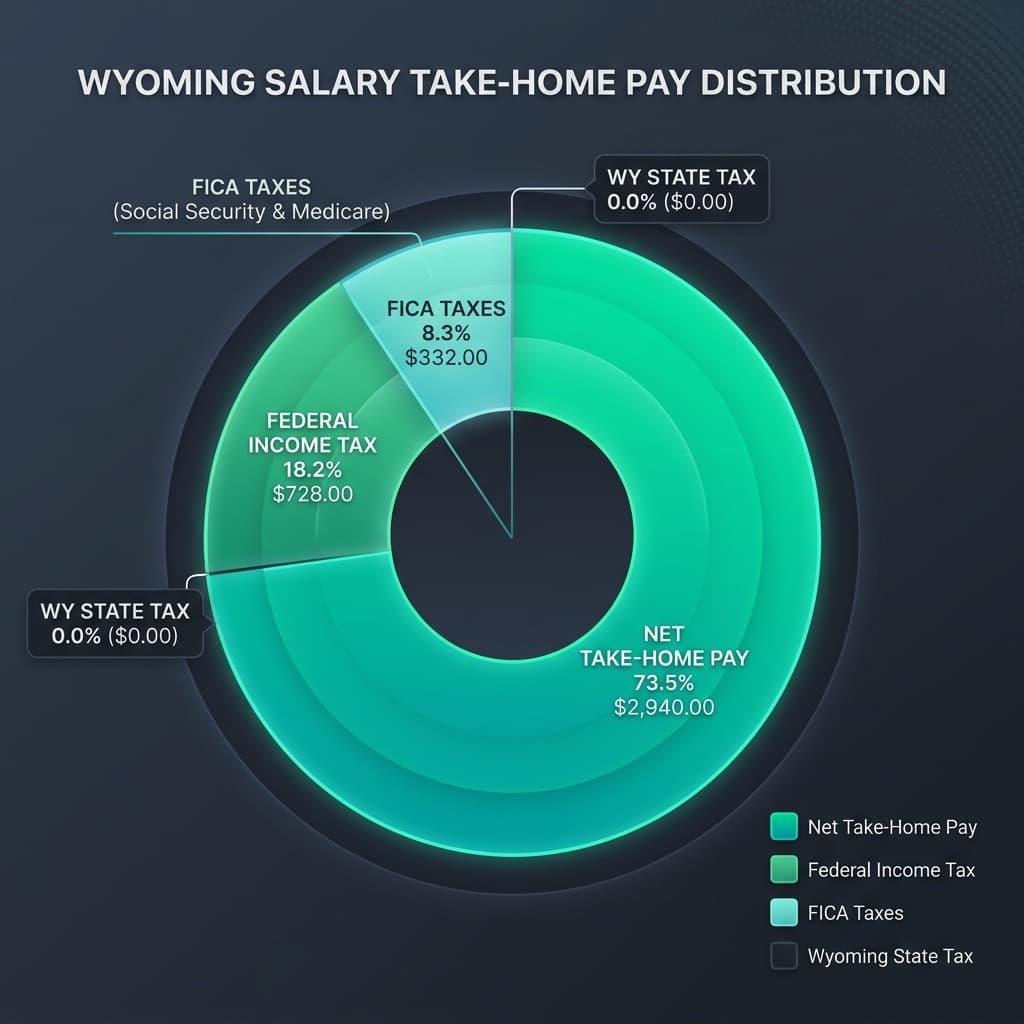
Wyoming W-2 payroll check deductions do not include any state-level income taxes, as the state imposes a 0.0% personal income tax rate. For a Single filer earning a gross annual salary of $89,000.00 with no pre-tax contributions or additional deductions, the net take-home pay is exactly $71,441.50 annually. On a bi-weekly payroll schedule, this results in direct bank deposits of $2,747.75 per paycheck. In total, federal taxes account for the entire withholding sum of $17,558.50.
The total withholdings consist of Federal Income Tax (FIT) and Federal Insurance Contributions Act (FICA) taxes. Under the 2026 federal brackets, Single tax filers are granted a standard deduction of $16,100, leaving a federal taxable income of $72,900.00. The resulting federal income tax is $10,750.00 ($413.46 bi-weekly). FICA contributions deduct 6.2% of gross earnings for Social Security ($5,518.00 annually or $212.23 per paycheck) and 1.45% for Medicare ($1,290.50 annually or $49.63 per paycheck). Because WY does not levy a state income tax or employee-paid payroll taxes, the state-level deduction is exactly $0.00. Compare your disposable income across the nation by using our main federal paycheck calculator.
| Withholding Category | Annual Amount | Bi-Weekly Paycheck |
|---|---|---|
| Gross W-2 Earnings | $89,000.00 | $3,423.08 |
| Federal Income Tax (FIT) | -$10,750.00 | -$413.46 |
| Social Security Tax (6.2%) | -$5,518.00 | -$212.23 |
| Medicare Tax (1.45%) | -$1,290.50 | -$49.63 |
| Wyoming State Income Tax | -$0.00 | -$0.00 |
| Net Take-Home Pay | $71,441.50 | $2,747.75 |
Tax Benefits of Wyoming's No State Income Tax Structure
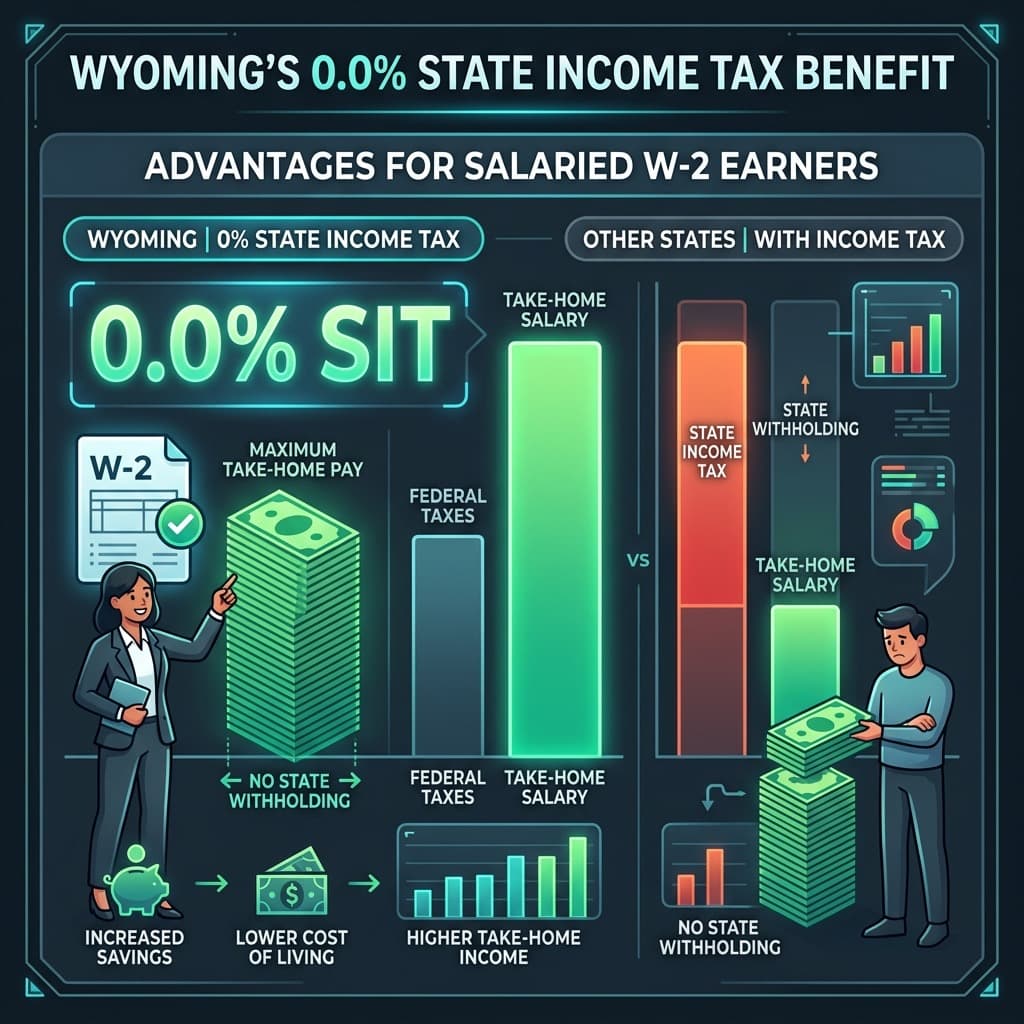
Wyoming is one of a handful of states in the US that levies no state-level personal income tax. Whether you file as Single, Head of Household, or Married Filing Jointly, your state-level income tax rate remains a flat 0.0%. This policy applies to all forms of earned income, including hourly wages, salaried compensation, bonuses, commissions, and investment returns.
This zero-tax status eliminates the need to file state tax returns or calculate state standard deductions. Taxpayers in WY benefit from keeping their entire salary minus federal taxes, which makes the state an attractive destination for remote workers, retirees, and businesses looking to reduce overall tax burdens.
Employer Payroll Taxes and Wyoming Unemployment Insurance (SUTA)
While W-2 employees in Wyoming do not face state paycheck withholdings, employers are responsible for payroll taxes. The state levies employer-paid taxes to fund the state's unemployment insurance program.
State Unemployment Tax Act (SUTA) taxes are paid on a specific employee taxable wage base. New businesses pay a standard rate, while established businesses are assigned rates based on their claims record. For registration guidelines, forms, and compliance timelines, consult the official Wyoming Department of Workforce Services portal.
Wyoming Paycheck Stub Math: Pre-Tax Deductions Walkthrough
Contributing to pre-tax plans like traditional 401(k) accounts or health insurance premiums lowers your federal taxable income. Consider a married couple in Wyoming filing jointly with a combined gross annual W-2 salary of $138,000.00. They contribute 6% of their gross salary ($8,280.00 annually) to a traditional 401(k) and pay $140.00 bi-weekly ($3,640.00 annually) in pre-tax health insurance premiums.
FICA taxes are calculated after subtracting health premium deductions, leaving a taxable FICA base of $134,360. This results in $8,330.32 in Social Security (6.2%) and $1,948.22 in Medicare (1.45%), making a FICA total of $10,278.54. Federal income tax (FIT) is computed after subtracting both pre-tax benefits ($11,920 total) and the federal standard deduction of $32,200, resulting in a federal tax of $10,769.60 on taxable wages of $93,880.00.
This results in the following paycheck calculations:
- Gross Period Pay: $5,307.69
- Social Security (6.2% of FICA-taxable base): $320.40
- Medicare (1.45% of FICA-taxable base): $74.93
- Wyoming State Income Tax (SIT): $0.00
- Federal Income Tax withholding (FIT): $414.22 (annualized to $10,769.60)
- Total paycheck deductions: $1,268.01 (including pre-tax contributions and taxes)
- Net paycheck (Take-Home amount): $4,039.68
Because Wyoming levies no state income tax, state withholdings remain $0.00 regardless of pre-tax deductions. Combining pre-tax contributions, FIT, and FICA, total deductions reach $32,968.14. This leaves a net take-home pay of $105,031.86, translating to bi-weekly pay deposits of exactly $4,039.68.
Mountain West Regional Tax Comparison: Wyoming vs. Neighboring States
Wyoming’s zero-tax structure makes it a regional tax haven compared to surrounding Mountain West states. To the south, Colorado charges a flat state income tax rate of 4.40%, and Utah assesses a flat rate of 4.45%. To the west, Idaho levies a flat state tax rate of 5.30%. To the north, Montana has progressive brackets peaking at 5.65%. To the east, Nebraska has progressive rates up to 4.55%, and South Dakota is the only neighbor that also has no state income tax on earned wages. Remote workers and business entities often evaluate these rates when deciding where to establish residency or offices.
Frequently Asked Questions (FAQs)
Other State Paycheck Calculators
Colorado Paycheck Calculator
Estimate take-home earnings with Colorado's flat tax rate (4.40%) and FAMLI deductions.
Utah Paycheck Calculator
Calculate take-home pay with Utah's flat tax rate (4.55%) and standard deductions.
Montana Paycheck Calculator
Calculate take-home pay with Montana's progressive tax brackets and standard deductions.
South Dakota Paycheck Calculator
Calculate take-home pay in South Dakota, featuring no state personal income tax.