Vermont Paycheck Calculator
Calculate your net take-home salary in Vermont. Enter your gross income, pay frequency, filing status, and deductions to see federal taxes, FICA, and progressive state tax.
Estimated Take-Home Pay
per bi-weekly pay period
Detailed Deductions Breakdown
Vermont Take-Home Pay Analysis: Earning $81,000 W-2 Salary
A W-2 annual gross income of $81,000.00 earned in Vermont resolves to a net take-home pay of $62,702.00. Bi-weekly pay envelopes deliver exactly $2,411.62 in direct deposits, while the combined burden of federal and state withholdings diverts $18,298.00 from gross pay over the course of the tax year.
Vermont's state income tax operates under progressive tax brackets, starting at 3.35% and rising to 8.75%. Federal taxes subtract $8,990.00 in Federal Income Tax (FIT) after a Single standard deduction of $16,100 is applied. Social Security (6.2%) and Medicare (1.45%) account for $5,022.00 and $1,174.50 respectively. Vermont progressive state tax (SIT) requires a payment of $3,111.50, calculated on state taxable income after applying the $7,000 state standard deduction and $4,500 personal exemption. Compare these calculations with other states using our main federal paycheck calculator.
| Withholding Type | Annual Total | Bi-Weekly Paycheck |
|---|---|---|
| Gross Salary | $81,000.00 | $3,115.38 |
| Federal Income Tax | -$8,990.00 | -$345.77 |
| Social Security Tax (6.2%) | -$5,022.00 | -$193.15 |
| Medicare Tax (1.45%) | -$1,174.50 | -$45.17 |
| Vermont State Tax | -$3,111.50 | -$119.67 |
| Net Take-Home Pay | $62,702.00 | $2,411.62 |
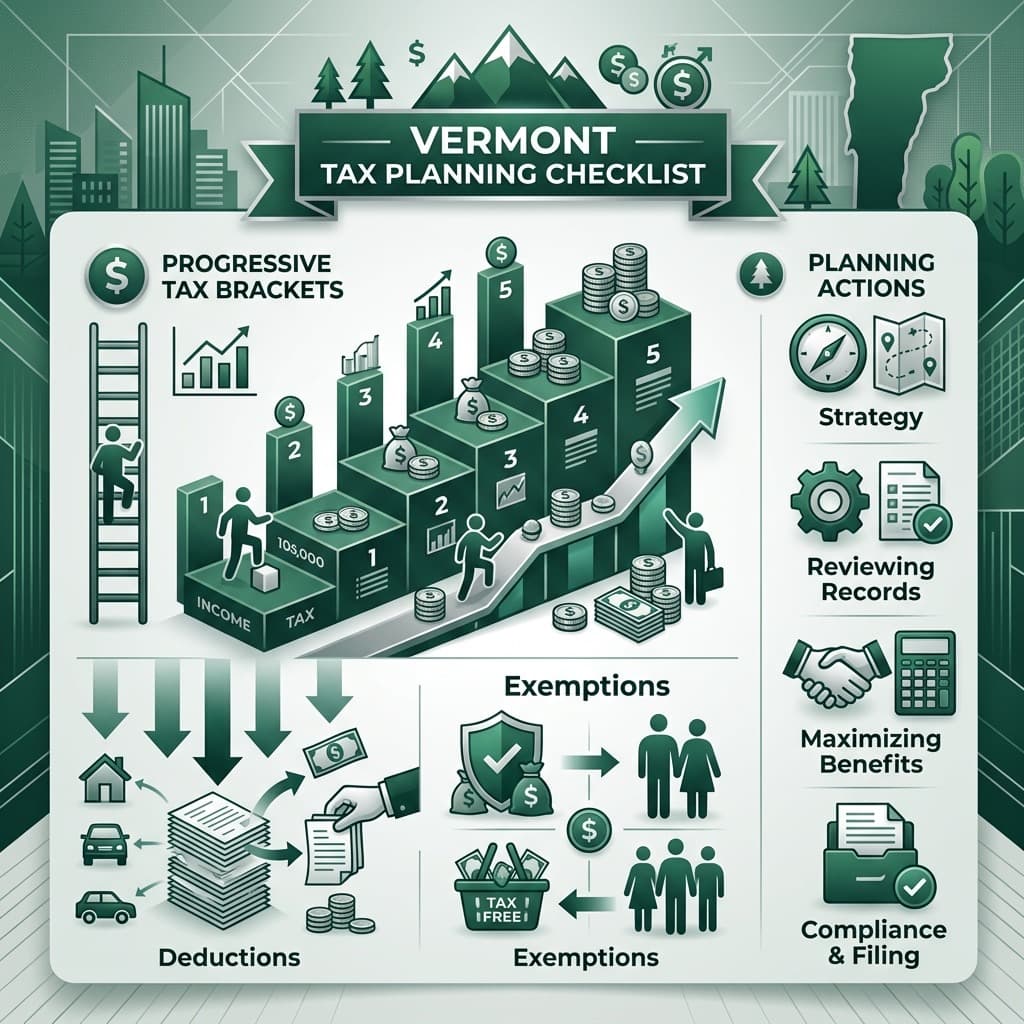
Calculating Vermont's Progressive State Income Tax Brackets
Vermont levies a progressive state income tax, with marginal tax rates that apply in tiers to your taxable income. For 2026, VT single filers face four brackets starting at 3.35% on income up to $45,400, rising to 6.60% (up to $110,050), 7.60% (up to $229,550), and peaking at 8.75% for taxable income over $229,550.
Vermont calculates state taxable income by subtracting state-specific standard deductions and exemptions from federal adjusted gross income. In 2026, Single filers subtract a standard deduction of $7,000 plus a personal exemption allowance of $4,500, creating a combined deduction shield of $11,500. This ensures that lower portions of income are protected from progressive state brackets.
Vermont Reemployment Assistance (SUTA) and Employer Fees
Although employees do not pay state-level disability insurance or employee-paid family leave taxes, employers in Vermont face specific payroll obligations. The primary employer payroll tax is the State Unemployment Tax Act (SUTA) contribution.
SUTA contributions are calculated on a taxable wage base per employee. New employers face a standard entry rate, while experienced employers pay variable rates ranging based on their history of reemployment assistance claims. For detailed business compliance forms and filing schedules, review guidelines directly on the official Vermont Department of Labor portal.

Vermont Take-Home Pay Walkthrough with Pre-Tax Benefits
Diverting portion of gross pay to pre-tax savings plans reduces taxable income for both federal and state tax calculations. Consider a married couple in Vermont filing jointly with a combined gross annual income of $118,000. They decide to contribute 6% of their gross pay ($7,080 annually) to a traditional 401(k) retirement plan and pay $130 bi-weekly ($3,380 annually) for employee health insurance.
FICA taxes are calculated after subtracting pre-tax health insurance premiums, which reduces the taxable FICA base to $114,620. This results in $7,106.44 in Social Security taxes (6.2%) and $1,661.99 in Medicare taxes (1.45%), for a FICA total of $8,768.43. Federal income tax (FIT) is computed after subtracting both the 401(k) allocations and health premiums ($10,460 total) and the federal standard joint deduction of $32,200, resulting in a federal tax of $8,506.40.
This results in the following paycheck calculations:
- Gross Period Pay: $4,538.46
- Social Security (6.2% of FICA-taxable base): $273.32
- Medicare (1.45% of FICA-taxable base): $63.92
- Vermont State Income Tax (SIT): $126.39 (annualized to $3,286.08)
- Federal Income Tax withholding (FIT): $327.17 (annualized to $8,506.40)
- Total paycheck deductions: $1,193.11 (including pre-tax contributions and taxes)
- Net paycheck (Take-Home amount): $3,345.35
Vermont state income tax is calculated starting from federal AGI ($107,540) minus the VT married standard deduction ($14,050) and personal exemptions ($9,000), leaving a taxable state base of $84,490. Using the progressive joint brackets, their state tax totals $3,286.08. Factoring in pre-tax savings, FIT, FICA, and state tax, their total annual deductions reach $31,020.91. This leaves a net take-home pay of $86,979.09, which translates to a bi-weekly deposit of $3,345.35.
New England Tax Comparison: Vermont vs. Neighboring States
Vermont’s progressive tax structure can be compared to other New England states. To the east, New Hampshire levies zero state tax on earned W-2 wages. Massachusetts to the south has a flat state income tax rate of 5.0% on earned income, with a surtax on high earners. New York to the west has progressive brackets ranging up to 10.9%. This regional tax diversity allows VT earners to weigh their take-home pay advantages when planning residency or remote work options.
Frequently Asked Questions (FAQs)
Other State Paycheck Calculators
New Hampshire Paycheck Calculator
Calculate take-home pay in New Hampshire, featuring no state personal income tax on wages.
New York Paycheck Calculator
Calculate take-home pay with New York's progressive tax brackets and local NYC taxes.
Massachusetts Paycheck Calculator
Calculate take-home pay with Massachusetts' flat rate (5.0%) and standard deductions.
Maine Paycheck Calculator
Calculate take-home pay with Maine's graduated rates (5.8% - 7.15%) and standard deductions.